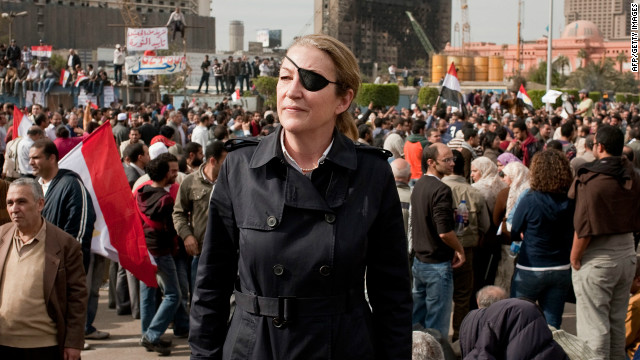
“Journalist Marie Colvin Died Trying to Get Her Shoes, Her Paper Reports.” CNN. February 27, 2012. Accessed July 08, 2019. https://edition.cnn.com/2012/02/26/world/syria-marie-colvin/index.html.
The importance of those who witness these horrors so we do not have to.
Marie Colvin was a world renowned American War Correspondent. Marie, spent her time as a foreign affairs correspondent working for the British newspaper the Sunday Times. Marie was an essential part of The Sunday Times from 1985, until the time of her death. Marie died doing what she loved, reporting for those who could not. She died in Syria while covering the siege of Homs. The siege of Homs was a military confrontation between the Syrian military and the Syrian opposition, that took place in the city of Homs as apart of the Syrian Civil War.
Spending her life and career specializing in the Middle East, Colvin also reported from areas such as Chechnya, Kosovo, Sierra Leone, Zimbabwe, Sri Lanka, and East Timor. During her time in East Timor she was credited with saving the lives of 1,500 women and children from a compound besieged by Indonesian-backed forces. She did so by refusing to abandon them, she stayed with a United Nations force, reporting in her newspaper and on television. They were evacuated after four days. Colvin then went onto win the International Women’s Media Foundation award for courage in journalism for her coverage of Kosovo and Chechnya.
Aside from all of this Marie Colvin also wrote and produced incredibly moving and necessary documentaries. These documentaries are Arafat: Behind the Myth, for BBC. She was a jack of a trades and she continues to inspire journalists and the world of journalism to come.
Not only did Marie Colvin lose her life doing what she loved but she also lost an eye. Marie was on site reporting in Sri Lanka. She was left blind as the result of a blast from a Sri-Lanken Army rocket-propelled grenade. This tragic event took place on April, 16th in 2001. This did not stop her though and she went on to continue her amazing work. She only added an eye patch as an accessory and there was no way she was going to leave people wondering.
Colvin’s legacy and work live on. She made her last broadcast from Homs before she died, on the evening of February 21, appearing on the BBC Channel, CNN, ITN News and News via satellite phones. She described scenes of horror to her viewers, or listeners by explaining the “merciless” shelling and sniper attacks against civilian buildings and people on the streets of Homs by Syrian forces. Colvin, told Anderson Cooper what she saw in Homs was the worst conflict she has ever been a witness to. Colvin passed away on February 22, alongside fellow photojournalist Remi Ochlik. An autopsy was conducted by the Syrian government, which showed Colvin’s death was caused by an “improvised explosive devise filled with nails”. The Syrian government claims the explosive device had to have been planted there by terrorists on the day of February 22. The two journalists were packing up their gear when they realized they were under attack.
The world needs journalists like Marie Colvin to report what needs to be reported. She took on excruciating mental and physical rolls in order to ensure that the public was receiving the necessary information. Marie changed the journalism game for the better and she also exemplified I sense of bravery and confidence that the world needs in dark, hard times.
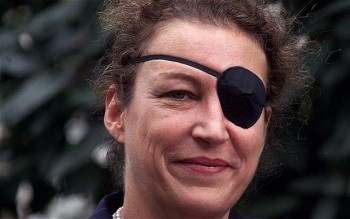
“File:Marie Colvin.jpg.” Wikipedia. April 04, 2018. Accessed July 08, 2019. https://en.wikipedia.org/wiki/Marie_Colvin#/media/File:Marie_Colvin.jpg.
Source: Garcia-Navarro, Lulu. “A New Biography Of Marie Colvin, Eyewitness To War.” NPR. November 04, 2018. Accessed July 08, 2019. https://www.npr.org/2018/11/04/663571722/a-new-biography-of-marie-colvin-eyewitness-to-war?t=1562587299445.
 Emily's Blog
